
Have you ever stood in the garden aisle wondering whether a jug of chemical herbicide is really the only answer to the weeds crowding your walkway? Many of the ingredients that handle common weeds are already sitting in your kitchen. Vinegar, salt, and boiling water each work in different ways, and knowing which one fits a given situation saves money and keeps harsh residues off the ground you care about.
Why Homemade Weed Control Appeals To So Many Gardeners
Cost and control are the two reasons most people reach for a DIY approach. A gallon of household vinegar runs a fraction of what a branded spray costs, and you already own a kettle and a box of salt. There is also the matter of knowing exactly what you are putting on the soil near vegetable beds, pets, and children.
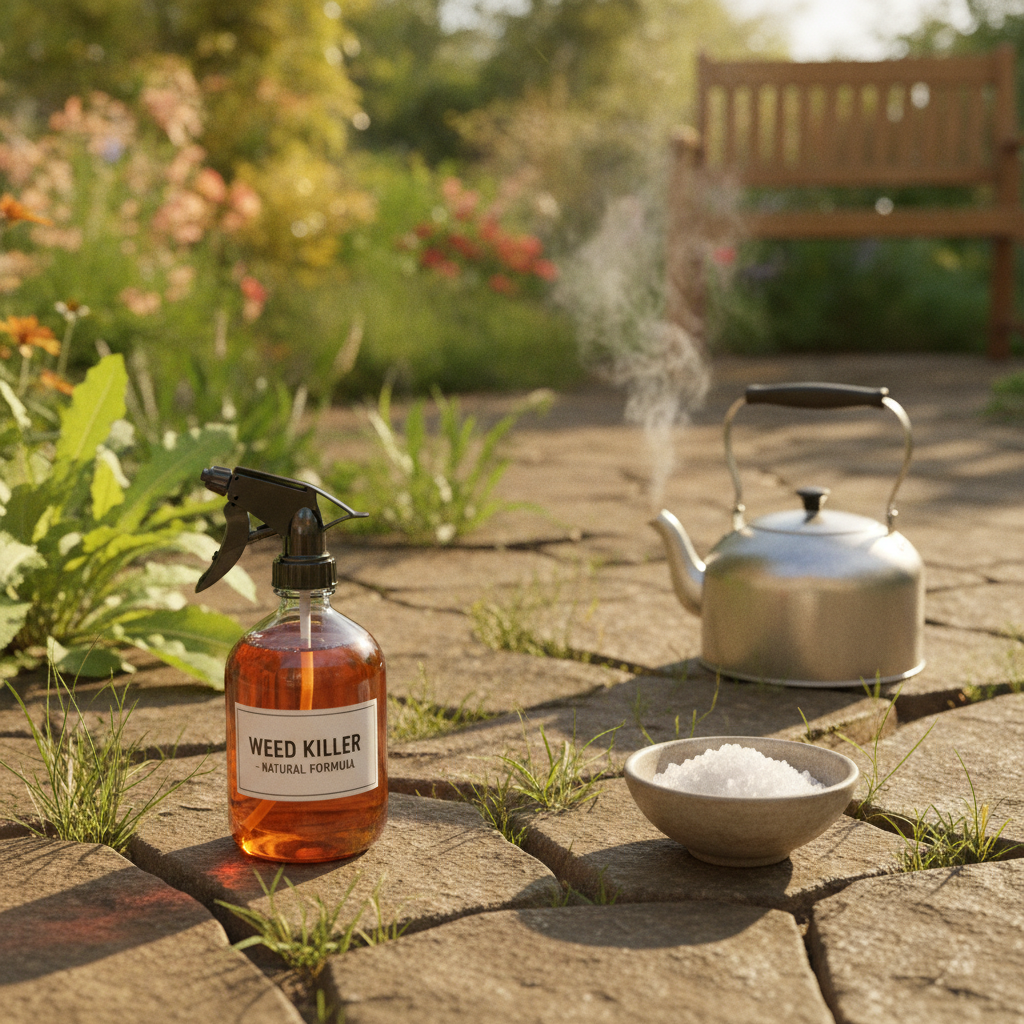
A natural weed killer trades convenience for transparency. You mix it, you apply it, and you accept that it may need a repeat pass. For spot treatment along fences, cracks, and borders, that tradeoff often lands in your favor.
How Vinegar Works As A Weed Spray
Vinegar kills by drying out the leaf tissue it touches, which is why a vinegar weed spray shows results within hours on a sunny day. Standard pantry vinegar sits around five percent acetic acid, strong enough for young, tender weeds. Horticultural vinegar reaches twenty percent and handles tougher growth, though it demands gloves and eye protection because it can burn skin.
The important limitation is that acetic acid is a contact killer. It scorches what it lands on but rarely reaches the root of an established perennial. Expect annual weeds to collapse quickly and stubborn roots to resprout.
Ingredients For A Basic Vinegar Mix
- One gallon of five percent household vinegar for most driveway and patio weeds
- One tablespoon of liquid dish soap to help the spray cling to waxy leaves
- An optional cup of salt for cracks where you want nothing to grow back
- A clean spray bottle or pump sprayer for even coverage
Using Salt To Keep Problem Spots Bare
Salt is the most aggressive tool in this trio, and that strength is exactly why you must use it carefully. It draws moisture out of plants and lingers in the soil, which can leave an area barren for months. That makes it useful for gravel paths, cracks in concrete, and seams where you never want a green blade again.
Keep salt away from garden beds and tree roots. It travels with rainwater and can damage plants well beyond the spot you treated. Think of it as a targeted solution for permanent hardscape, not a general-purpose homemade herbicide.
Spots Where A Salt Treatment Makes Sense
- Cracks between patio pavers that you never intend to plant
- Gravel driveways and pathways set well away from lawns
- Fence lines where no desirable growth is nearby
- Narrow seams along a shed or garage foundation
Boiling Water For Quick, Chemical Free Results
Boiling water may be the simplest method of all, and it costs nothing beyond the energy to heat a kettle. Poured directly over a weed, it ruptures the plant cells and leaves the foliage limp within a day. It works especially well on seedlings and on weeds poking through the gaps in a walkway.
The appeal here is immediacy and zero residue. Once the water cools, nothing lingers in the soil, so you can replant the area quickly. The limit is reach, since a single pour cools fast and may not penetrate a deep taproot.
Matching The Method To The Weed
No single recipe handles every weed, and choosing well is what separates a frustrating afternoon from a satisfying one. Shallow annuals like chickweed and young crabgrass surrender to almost anything, including a quick splash of hot water. Deep-rooted invaders like dandelion and bindweed often need repeated treatment or a stronger concentration.
Timing matters as much as the mix. Treat on a dry, sunny day so the sun amplifies the acetic acid and the plant has no moisture to recover with. A weed you hit before it sets seed is a weed you may never see again in that spot.
Which Approach Suits Common Weeds
- Chickweed and purslane respond fast to a basic vinegar weed spray
- Dandelions usually require stronger vinegar plus a second application
- Grass in paver cracks clears easily with boiling water
- Persistent bindweed in gravel is a candidate for a salt treatment
Application Tips That Improve Your Odds
Technique often decides whether a treatment holds. Spray until leaves are coated but not dripping, since runoff into the soil wastes product and risks nearby plants. Work on a calm day so drift does not land on a tomato plant three feet away. Mid-morning on a cloudless day gives you the best scorching conditions.
Patience pays off too. Give each application a full day before deciding whether a second pass is needed. Hitting the same weed twice in a week is far more effective than one heavy soak that mostly runs off.
Weighing Cost, Effort, And Long Term Value
The honest tradeoff with organic weed control is labor. These methods are inexpensive and gentle on the surrounding environment, but they rarely offer the one-and-done performance of a systemic chemical that travels to the root. You are buying lower cost and more control in exchange for a bit more repetition.
For a modest patio, a border, or a gravel path, that math usually favors the kitchen-shelf approach. For a large field of entrenched perennials, you may decide the time spent spraying week after week is worth comparing against other options. Both choices have a place depending on the size of the problem and how much hands-on effort you want to invest.
Factors Worth Considering Before You Mix
- The size of the area and how often you can realistically retreat it
- Proximity to vegetables, flowers, pets, and play areas
- Whether you want the ground to stay bare or support new planting later
- The depth and stubbornness of the roots you are fighting
Bringing Your Weed Strategy Together
A thoughtful approach to weeds usually blends more than one method rather than relying on a single jug of anything. Boiling water handles the quick jobs, a vinegar spray covers broad surface growth, and a careful dose of salt locks down the spots you want permanently clear. Each has a role, and each has a limit worth respecting.
The gardeners who stay ahead of weeds tend to treat early, treat consistently, and match the method to the plant in front of them. With a few household staples and a clear sense of what each one does, you have a flexible set of tools for keeping unwanted growth in check.