
Have you ever finished a weeding session only to spend the next day nursing a sore lower back? The ache usually comes from the tool, not the work. Bending, kneeling, and yanking at stubborn roots puts strain on your spine and knees, and the right implement can shift most of that effort away from your body. Choosing well depends on your soil, your beds, and the weeds you face most often.
Why Your Tool Choice Matters More Than Your Technique
You can have perfect form and still wreck your back if the tool forces you into an awkward position. A short-handled hand weeder keeps you crouched for an hour; a long-handled hoe lets you stand upright and use your core instead of your spine. The difference compounds across a season of regular maintenance.
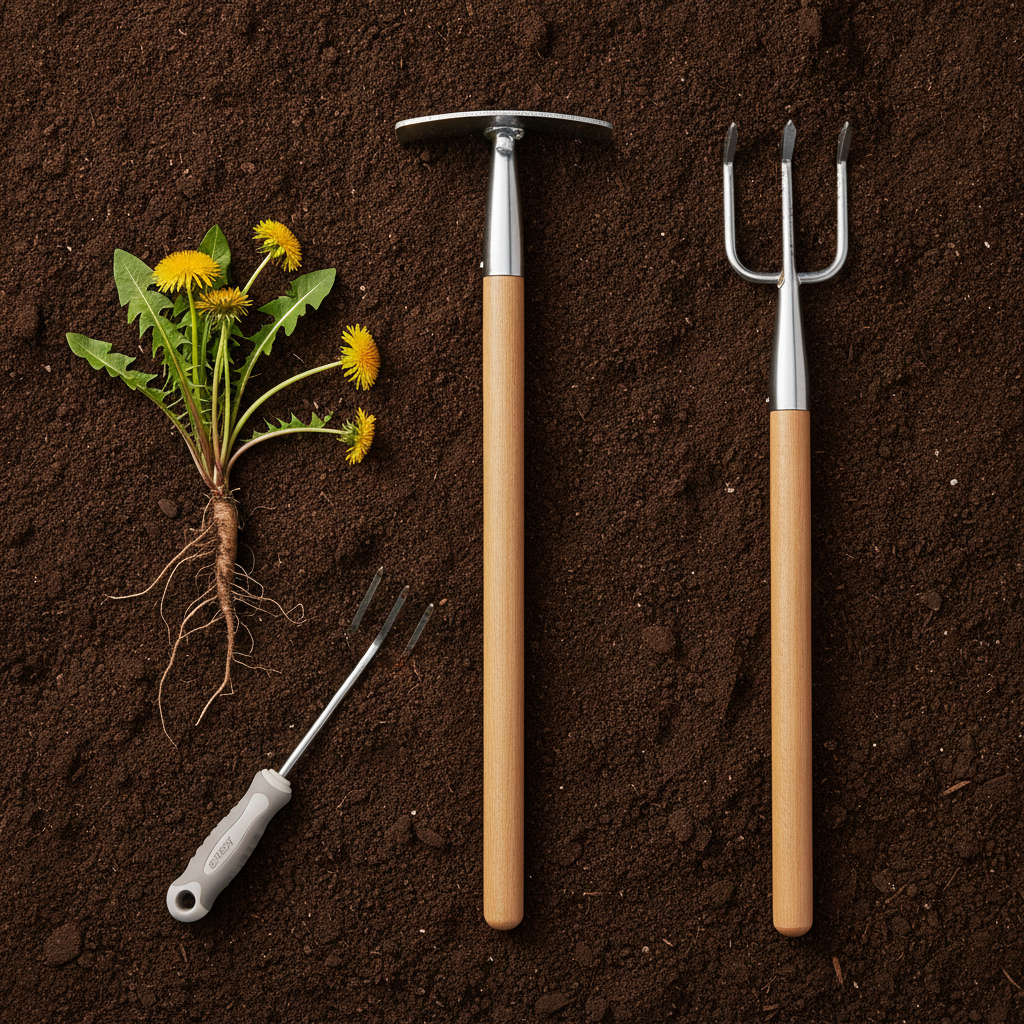
The weed itself also dictates the tool. A taproot like dandelion needs leverage to pull cleanly, while shallow annual seedlings respond to a quick slice at the soil surface. Matching the implement to the root structure means fewer passes and less wasted motion. That efficiency is what actually protects your body over time.
Stand-Up Weeders and Root Pullers
If taproots are your main frustration, a stand-up weeder changes the entire experience. These tools use a set of serrated claws or tines that you drive into the soil beside the weed, then tilt back to extract the whole root using a foot pedal and your body weight. You never kneel, and the leverage does the pulling for you.
They work best in soil that holds some moisture, which is why many gardeners weed a day after rain or watering. In bone-dry, compacted ground the claws struggle to penetrate deep enough to grip the root. Expect to pay somewhere in the range of a modest dinner out for a sturdy model, and treat the ejection mechanism as the feature that separates a good one from a frustrating one.
What To Weigh Before Buying A Stand-Up Model
- Soil type, since clay and rocky ground resist deep tines more than loose loam
- Handle height relative to your own, which determines whether you stand truly upright
- The weed clearing or ejection mechanism, so you are not bending to pull debris off by hand
- Build material, with coated steel resisting rust better than untreated metal over several seasons
The Stirrup Hoe and Its Cousins
For large beds full of young annual weeds, nothing covers ground faster than a stirrup hoe. The looped blade, sometimes called a hula or scuffle hoe, slices just below the surface on both the push and pull stroke. You walk along the row, working the blade back and forth, and the weeds are severed from their roots before they can mature.
This approach rewards timing. Catching weeds while they are small seedlings means a single light pass does the job, whereas waiting until they are established turns the same hoe into hard labor. A stirrup hoe pairs naturally with a long handle, keeping your shoulders back and your weight over your feet rather than hunched forward.
Hoe Styles Suited To Different Jobs
- Stirrup or scuffle hoe for fast surface cutting across wide, open beds
- Draw hoe for chopping tougher weeds and shaping soil in heavier ground
- Collinear hoe for precise work between closely spaced plants and tight rows
- Warren hoe with its pointed head for digging furrows and reaching narrow gaps
Hand Tools for Close and Precise Work
Even with the best long-handled gear, some weeding happens up close. Weeds that sprout between pavers, crowd the base of prized perennials, or hide in container plantings call for hand tools you can control with a single wrist movement. The goal here is not covering ground but removing a weed without disturbing what you want to keep.
A hand weeder with a forked tip, often called a dandelion fork or fishtail weeder, slips beside a taproot and pries it loose. A Cape Cod weeder or a small hori-hori knife handles slicing and digging in cramped spaces. These are inexpensive, usually the cost of a couple of coffees, and a cushioned grip reduces hand fatigue during longer sessions.
Garden Hand Tools That Earn Their Place
- Forked hand weeder for levering taproots out of borders and lawns
- Cape Cod weeder for drawing a blade cleanly through soft soil
- Hori-hori knife for digging, cutting, and transplanting in one tool
- Knee pad or kneeler to protect joints when close work is unavoidable
Matching the Tool to Your Soil and Layout
The same weeding tools behave very differently depending on where you use them. Loose, well-amended beds let a stirrup hoe glide and let root pullers sink deep with little effort. Compacted clay or stony ground fights back, blunting blades and bending flimsy tines, so heavier, reinforced tools tend to last longer and frustrate you less.
Layout matters just as much. Tightly interplanted vegetable beds favor narrow, precise hand tools, while open gravel paths and wide rows reward a wide hoe you can sweep across in long strokes. Thinking about your actual garden before buying prevents you from owning three tools that all do the same job in the wrong setting.
Comfort, Weight, and the Details That Prevent Injury
A tool that works well in the store aisle can still hurt you in the garden if it is poorly balanced. Handle length should let you stand with a slight bend at most, not a permanent stoop. Lighter tools reduce arm fatigue, but a tool that is too light can feel flimsy and force you to push harder, which defeats the purpose.
Grip texture, handle material, and the balance point all influence how your hands and shoulders feel after an hour. Wooden handles absorb vibration and feel warm in cold weather, while fiberglass resists rot and weather. The small decisions around comfort are what determine whether you reach for the tool again next weekend.
Maintenance and Long-Term Value
A weeding tool is a purchase you want to make once, not every spring. The deciding factor is rarely the sticker price but how the tool holds up after dozens of sessions in damp soil. A sharp, well-kept blade cuts with a fraction of the effort of a dull one, so the maintenance habit directly affects your back as much as your budget.
Rinsing soil off after use, drying metal parts, and occasionally sharpening cutting edges extends the life of any hoe or weeder considerably. A quality tool that costs more upfront often outlasts several cheaper replacements, which makes the higher price the more economical choice across several seasons.
Simple Habits That Extend Tool Life
- Rinse and dry metal parts after each use to slow rust
- Sharpen hoe and weeder blades at the start of the season
- Rub a little oil into wooden handles to prevent cracking
- Store tools off the ground and out of standing moisture
Building a Weeding Kit That Fits You
Most gardens are served well by a small, deliberate combination rather than a shed full of overlapping gadgets. A long-handled hoe for wide beds, a stand-up puller for stubborn taproots, and one reliable hand tool for close work will cover the majority of situations you encounter through the growing season.
Your own body, soil, and planting style ultimately decide which of these earns a permanent spot by the back door. Weighing comfort, durability, and the specific weeds you battle most will point you toward the tools that keep weeding a manageable chore rather than a source of pain. The choice is a personal one shaped by your particular patch of ground.