
How much time do you really want to spend on a ladder each season, scooping wet leaves out of your gutters? For many homeowners, the answer is none. Gutter guards promise to cut that chore down dramatically, but the materials and designs vary widely in cost, durability, and real-world performance. Understanding how the main types behave under local tree cover helps you spend wisely.
Why Gutter Protection Matters More Than It Seems
Clogged gutters rarely announce themselves until water is already spilling over the edge, soaking your foundation, or seeping behind fascia boards. The repair bills from that water damage can dwarf what you would have spent protecting the system in the first place.
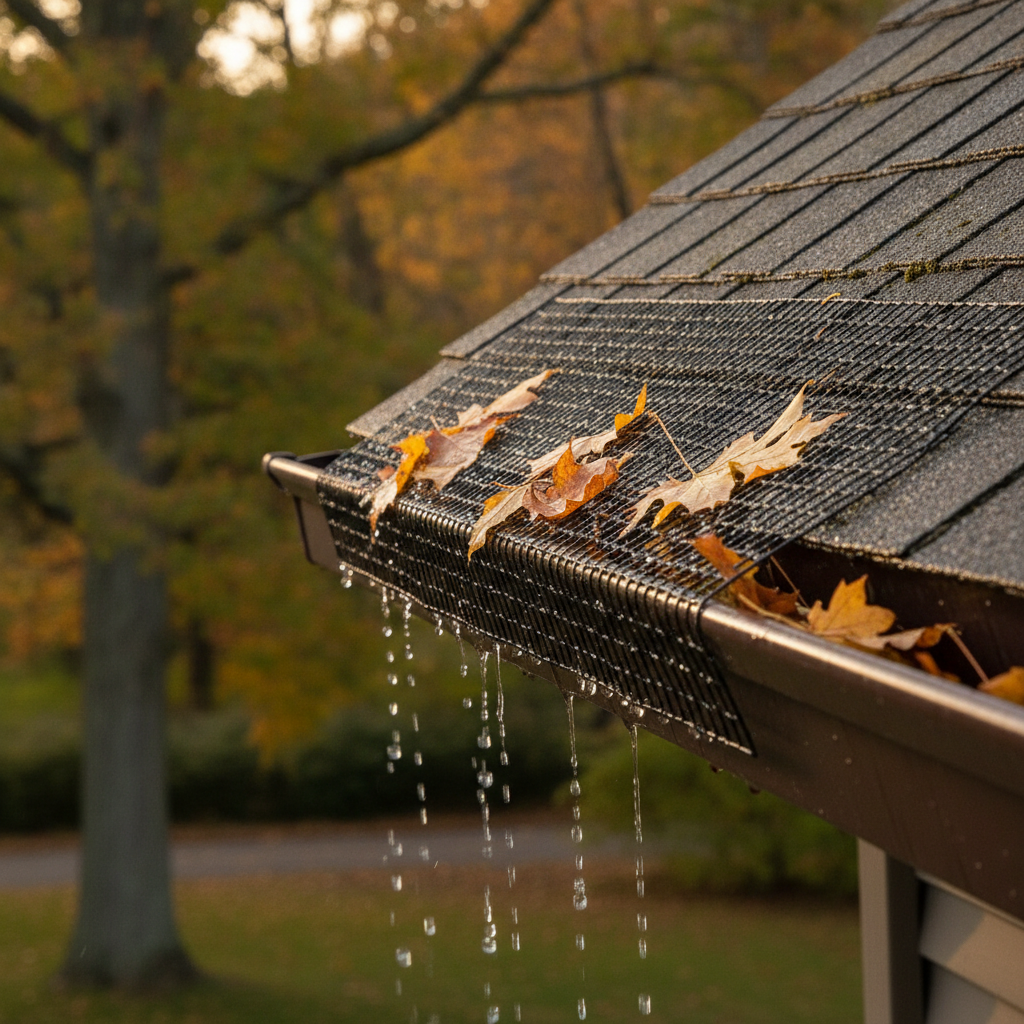
Gutter guards exist to interrupt that cycle by keeping debris out while letting rainwater through. Think of a house surrounded by mature oaks that drop acorns in fall and pollen in spring. Without protection, that homeowner is cleaning gutters three or four times a year, each session carrying the risk of a ladder fall.
The goal is not perfection but a meaningful reduction in maintenance and risk. The right choice depends on your roof, your trees, and how much you are willing to invest upfront.
How Mesh Guards Handle Fine Debris
Mesh guards use a fine metal or plastic screen stretched across the gutter opening, often supported by a solid frame. The tight weave blocks small debris like shingle grit, pine needles, and seed pods that larger openings let slip through. For homes under evergreens or near heavy pollen sources, this fine filtration is often the deciding factor.
Micro-mesh versions, typically made of stainless steel, represent the premium end of this category. They resist corrosion and handle decades of exposure, but they also carry the highest price among common options. Standard mesh in aluminum or plastic costs less and still outperforms coarser designs on fine material.
The tradeoff is maintenance of a different kind. Fine mesh can accumulate a film of pollen or shingle debris on its surface over time, which may require an occasional rinse to keep water flowing freely.
Situations Where Mesh Guards Earn Their Cost
- Properties shaded by pine, spruce, or other needle-dropping trees
- Regions with heavy seasonal pollen that coarser guards miss
- Homeowners prioritizing long-term durability over lower upfront spending
- Roofs where shingle grit runoff tends to collect in gutters
What Screen Guards Offer at a Lower Price
Screen guards are the familiar, budget-friendly option found on hardware store shelves. They consist of perforated metal or plastic panels with openings larger than mesh, designed to block leaves and twigs while remaining affordable and easy to install yourself. Many snap or slide into place without special tools, making them a common weekend project.
Their strength is accessibility. A homeowner facing mostly broadleaf debris, such as maple or sycamore leaves, often finds screens handle the bulk of the problem for a fraction of the cost of premium systems. The savings on both materials and professional installation are significant.
The limitation shows up with smaller debris. Pine needles and seeds can lodge in the openings or pass straight through, so screens suit yards without heavy fine-debris sources better than those surrounded by evergreens.
Where Foam Guards Fit Into the Picture
Foam guards take a different approach entirely. Instead of a surface barrier, they are porous inserts that sit inside the gutter channel, letting water filter through while blocking debris from settling at the bottom. Their appeal lies in simplicity and price, since you can cut them to length and press them into place in an afternoon.
For a one-story home with light tree cover, foam can be a reasonable stopgap that delays the need for a costlier system. It requires no fasteners and adapts to irregular gutter shapes that rigid panels struggle with.
Durability is the honest weakness here. Foam degrades under prolonged sun exposure, can trap organic matter that encourages seedlings to sprout, and generally has the shortest lifespan of the common materials, meaning replacement costs recur sooner.
Installation, Tools, and Service Decisions
How a guard gets installed shapes both your upfront cost and your long-term results. Screen and foam products are built for the do-it-yourself market, requiring little more than a ladder, gloves, and in some cases tin snips. Mesh systems, especially professional-grade micro-mesh, often come bundled with installation that includes cleaning and realigning your existing gutters.
Professional installation adds labor cost but can carry warranties that owner-installed products rarely match. If a company guarantees clog-free performance for years, that assurance has real value against future water damage.
Consider your comfort on a ladder honestly. Saving a few hundred dollars on installation loses its appeal if the work pushes you beyond your safe reach or leaves gaps that let debris through.
Factors Worth Weighing Before You Buy
- The dominant debris type in your yard and whether it is coarse or fine
- Your roof pitch and height, which affect installation difficulty and safety
- Expected lifespan of the material against its replacement interval
- Whether a warranty or service plan accompanies the product
- Total cost including both materials and labor, not just the sticker price
Matching the Guard to Your Local Tree Cover
The single most useful question you can ask is what actually falls on your roof. A home ringed by deciduous trees deals with large, visible leaves that nearly any guard will block. A home under pines faces needles so slender they defeat all but the finest mesh.
Mixed landscapes complicate the picture. If you have both oaks and spruces, coarse screens will stop the acorns but let needles through, so a mesh solution often makes more sense despite the higher price. Clog prevention works only when the opening size matches the smallest debris you regularly encounter.
Observing your gutters through a full season before committing gives you the clearest read. That patience can steer you away from paying for more protection than you need, or from underbuying and repeating the project a year later.
Long-Term Value and Ongoing Gutter Maintenance
No guard eliminates gutter maintenance completely, and any honest assessment should set that expectation. Even the finest mesh benefits from an occasional inspection to clear surface buildup, confirm fasteners remain tight, and check that downspouts drain freely.
What quality guards do change is the frequency and risk of that work. Shifting from four cleanings a year to one inspection represents a real reduction in both effort and exposure to ladder falls. Over a decade, a durable system that holds up without replacement often costs less per year than a cheap one you redo repeatedly.
Factor in the avoided costs too. Preventing a single episode of foundation seepage or fascia rot can offset much of what you spend on protection in the first place.
Choosing a Guard That Fits Your Home
The decision ultimately rests on three overlapping realities, which are the debris your trees produce, the budget you can commit, and the lifespan you expect from the material. Mesh guards lead on filtration and longevity, screens win on affordability and easy installation, and foam offers a quick, low-cost entry with a shorter horizon.
No single option serves every home equally. A compact house with minimal tree cover has different needs than a two-story home surrounded by evergreens and heavy canopy.
Weighing those variables against your own circumstances gives you a clear basis for the choice ahead.