
Have you ever hesitated over the sink, wondering whether that scrap of food will vanish quietly or come back to haunt you? A garbage disposal feels like it can handle almost anything, yet the difference between smooth operation and an expensive repair often comes down to a handful of everyday choices. Knowing what is safe to go down your garbage disposal protects the unit, your pipes, and your budget. The distinctions are more practical than technical.
Why The Rules Around Disposal Use Actually Matter
A disposal is a grinding chamber, not an incinerator. It relies on spinning impellers and a steady flow of water to break down soft material and push it toward your drain line. When you feed it the wrong things, you are not just risking a jam in the moment. You are shortening the life of a device that typically costs a few hundred dollars to replace and installs faster with a plumber you may not want to call twice.
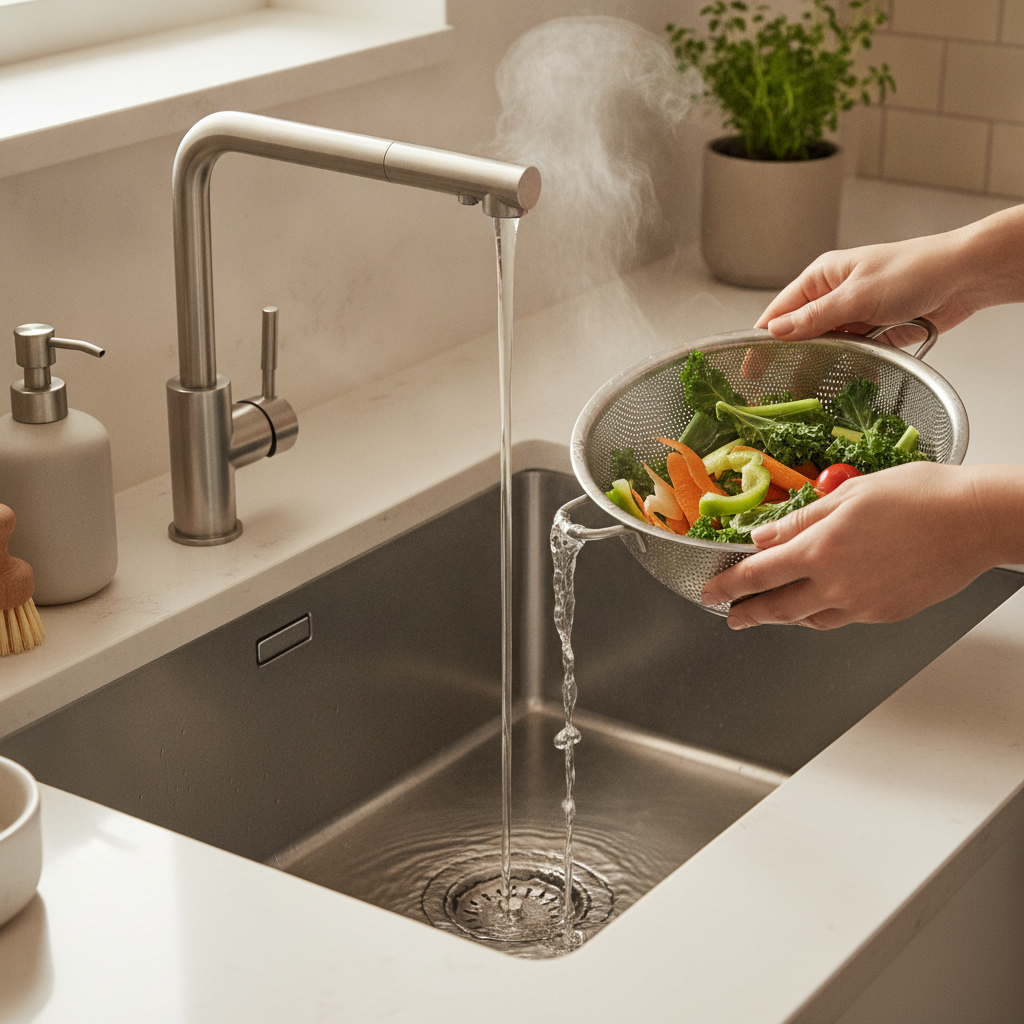
The stakes go beyond the unit itself. Grease and fibrous waste can travel past the disposal and settle in your pipes, where they harden and narrow the passage over months. A clog that starts as a slow drain can become a backup that affects your whole kitchen. Treating the disposal thoughtfully is really about protecting the plumbing behind it.
Sorting What The Disposal Handles Well
Most disposals were designed with a narrow job in mind: reducing small amounts of soft food waste into particles fine enough to flush away. When you match your habits to that intent, the unit runs quietly and lasts for years. The trick is thinking about texture and volume rather than assuming the motor can muscle through anything you drop in.
Cold water is your ally here. Running it before, during, and after grinding keeps the mechanism cool and helps carry particles all the way through the pipe. Feeding waste gradually rather than packing the chamber prevents the strain that wears down bearings over time.
Items That Break Down Cleanly
- Soft fruit scraps such as apple cores, melon rinds in small pieces, and berries
- Cooked vegetables and small amounts of leftover soft food
- Citrus peels in modest quantities, which can also help freshen the chamber
- Small bones from fish or chicken, in limited amounts, which help scour the grinding surfaces
- Ice cubes, which knock buildup loose and sharpen the impellers
These items share a common trait. They either soften quickly under water or stay small enough to move through the chamber without binding. When in doubt, ask yourself whether the scrap would dissolve or fragment easily, and whether you are adding a handful rather than a plateful.
Recognizing What Damages Or Clogs The System
The most common disposal failures trace back to a short list of repeat offenders. Fibrous foods like celery, corn husks, and artichokes wrap around the impellers and stall the motor. Starchy items such as pasta, rice, and potato peels expand with water and form a paste that coats the pipe walls. These are not dramatic mistakes in the moment, which is exactly why they cause trouble later.
Grease deserves special attention because it behaves differently than it looks. Warm bacon fat or oil pours easily, then cools and congeals somewhere in your drain line where you cannot see it. Over time it collects other debris and forms a stubborn blockage that no amount of grinding will clear. Pouring grease into a can and discarding it in the trash costs nothing and saves you the price of a service call.
Materials To Keep Out Of The Chamber
- Grease, cooking oil, and fatty drippings, which solidify inside pipes
- Coffee grounds, which accumulate into a dense sludge
- Eggshells, whose membranes can wrap around components despite common myths
- Pasta, rice, and other starches that swell after grinding
- Fibrous vegetables including celery, corn husks, and onion skins
- Fruit pits, large bones, and any hard object that can crack the grinding plate
- Non-food items such as twist ties, produce stickers, and packaging fragments
A useful mental filter is to consider whether something is hard, stringy, or prone to swelling. Any of those qualities signals that the trash or compost bin is the better destination. The few extra seconds it takes to scrape a plate into the garbage protect a machine that does not repair itself cheaply.
Keeping The Unit Reliable Over The Long Run
Even with careful use, a disposal benefits from occasional maintenance that most homeowners overlook. Odors are the earliest sign that residue is lingering in the chamber, and they usually respond to simple cleaning rather than a replacement. Grinding a few ice cubes with a handful of coarse salt scours the interior, while citrus peels leave a fresher scent without harsh chemicals that can corrode metal parts.
Think about the economics before reaching for aggressive drain cleaners. Chemical products marketed for clogs can damage disposal seals and rarely address grease that has already hardened downstream. When a jam happens, most units include a reset button and a hex slot on the underside that lets you free the impellers manually with an inexpensive wrench. Learning that one step can save you the cost of a service visit for a problem you could solve in minutes.
If your disposal is aging, runs loudly, or trips its reset repeatedly, replacement is worth weighing against ongoing repairs. Newer models grind more finely and run more quietly, and the upgrade can be modest compared with recurring plumber fees. Whether you handle the swap yourself or hire out the installation depends on your comfort with basic plumbing and the value you place on your time.
Habits That Extend The Life Of The Machine
- Run cold water throughout grinding and for several seconds afterward
- Feed waste in small batches rather than filling the chamber
- Clean the unit periodically with ice, salt, or citrus peels
- Avoid chemical drain openers that can degrade internal seals
- Know the location of the reset button and manual release for quick fixes
These practices cost almost nothing and take little time, yet they account for much of the difference between a disposal that lasts a decade and one that fails early. Consistency matters more than any single action. A machine treated gently and cleaned occasionally rarely surprises you.
Making Confident Choices At The Sink
The guidelines around disposal use are less about memorizing a list and more about understanding how the machine and your pipes actually work together. Soft, small, water-friendly scraps belong in the chamber. Grease, fibers, starches, and anything hard belong elsewhere. Once that logic becomes second nature, the daily decisions stop feeling like guesswork.
Your disposal is a small appliance carrying a meaningful share of your kitchen's workload, and the way you treat it shapes both its lifespan and the health of the plumbing beyond it. Weighing texture, volume, and simple maintenance against the cost of repairs gives you a clear framework for the choices you make every day. The decisions are yours to make with the information in front of you.