
When was the last time you actually looked at the filter inside your heating and cooling system? For most people, it's a part that stays out of sight until a technician points it out or energy bills creep upward. A clogged filter quietly strains your equipment and lets dust circulate through every room. Understanding how to size, rate, and replace it puts you back in control of a small task with outsized effects.
Why a Dirty Filter Costs You More Than You Think
A neglected HVAC air filter does more than collect dust. As it loads up, your blower motor works harder to pull air through the restriction, drawing more electricity and running longer cycles to reach the temperature you set. Over months, that added strain can shorten the life of expensive components.
There's also the comfort angle. Reduced airflow means some rooms never quite reach the thermostat setting, while the system short-cycles trying to compensate. What looks like a two-dollar piece of pleated media is often the difference between a system that hums along and one that limps.
Finding the Right Filter Size
Sizing is where most people stumble, and getting it wrong undermines everything else. A filter that's too small leaves gaps where unfiltered air sneaks past, carrying grit straight into the equipment. One that's too large simply won't seat in the slot. The goal is a snug fit that forces all return air through the media.
The easiest reference is the old filter itself, which almost always has dimensions printed on the cardboard frame. If that print is worn away, you can measure the slot directly and compare the nominal number to the actual one.
Numbers You Should Confirm Before Buying
- The nominal size printed on the frame, such as 16x25x1, which is rounded for labeling
- The actual size, often an eighth or quarter inch smaller than nominal
- The thickness, since one-inch and four-inch filters are not interchangeable without the right housing
- The airflow direction arrow, which should point toward the blower
Decoding the MERV Rating
The MERV rating tells you how effectively a filter captures particles, on a scale that generally runs from 1 to 16 for residential products. A higher number traps smaller particles, which sounds like an easy win until you factor in airflow. Dense, high-rated media can restrict a system that wasn't designed for it.
Most residential equipment is comfortable with filters in the MERV 8 to 13 range. A MERV 8 handles everyday dust and pollen, while a MERV 11 or 13 captures finer particles like smoke and some bacteria. Push beyond that without confirming your blower can handle the resistance, and you may trade better air quality for a struggling motor.
Matching the Rating to Your Household
- MERV 8 suits homes without allergy concerns and keeps airflow generous
- MERV 11 helps households with pets or mild allergies
- MERV 13 addresses fine particulates and is often chosen for sensitive occupants
- Anything higher usually belongs in equipment specifically rated for it
How Often to Swap It
Replacement timing is less about a fixed calendar date and more about how your home actually lives. A one-inch filter in a busy household with shedding pets can clog in a month, while a four-inch filter in a quiet home may last six. The thicker the media and the lower the particle load, the longer the interval.
A reliable habit is to inspect the filter monthly and hold it up to a light source. If light barely passes through the loaded side, it's time. Treating filter replacement as a seasonal ritual tied to changing your thermostat battery or adjusting for heating season keeps it from slipping your mind.
What a Replacement Actually Costs
Filter prices span a wide range, and the cheapest option is rarely the real bargain. A basic fiberglass panel might run a dollar or two but captures little and needs frequent swaps. A quality pleated filter in the MERV 8 to 13 range typically costs between ten and thirty dollars, with four-inch media and specialty sizes landing higher.
Subscription delivery services have made it easier to stay on schedule, shipping the correct size at set intervals so you never run out. Whether that convenience is worth a modest premium depends on how reliably you'd otherwise remember the task on your own.
The Replacement Process Step by Step
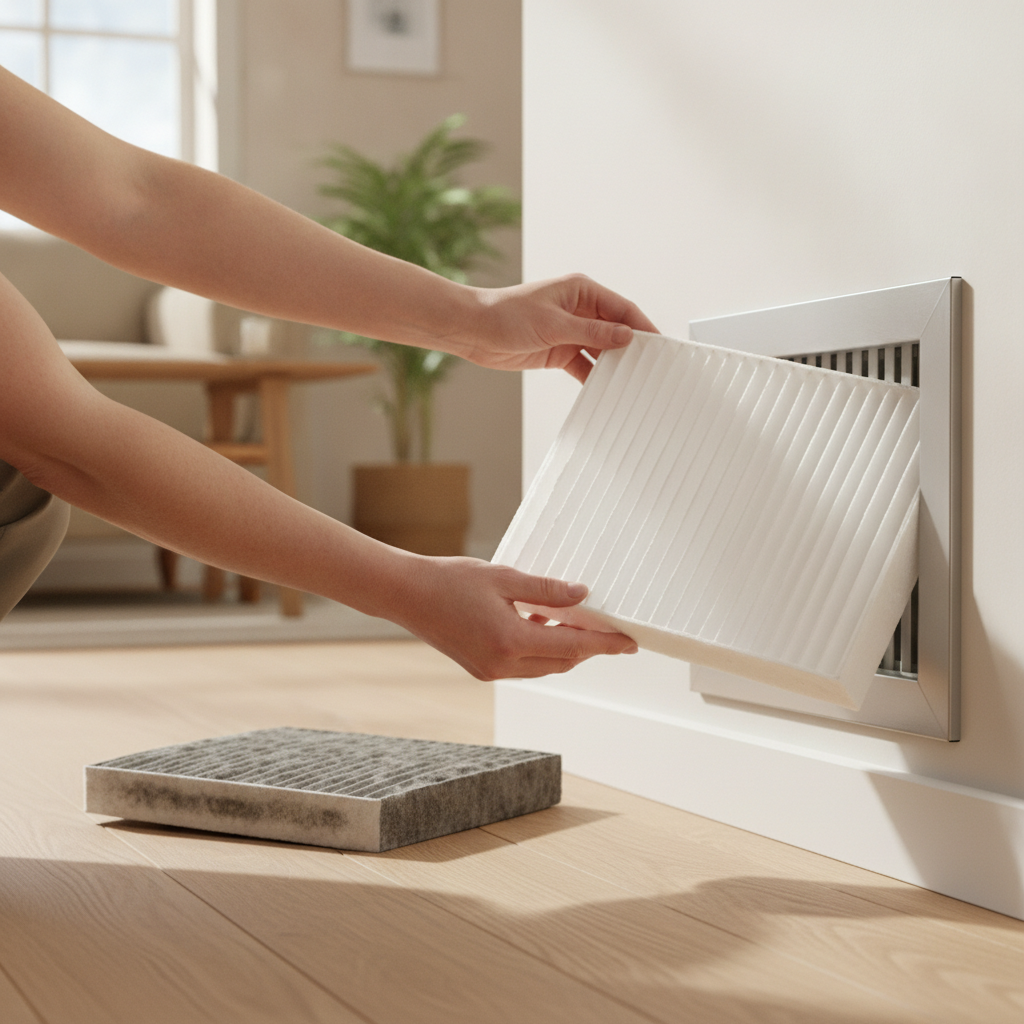
Swapping a filter takes only a few minutes once you know where everything lives. The filter sits either in a slot near the return air grille or in a compartment next to the indoor unit. Turning the system off first prevents the blower from pulling loose debris in while the slot is open.
Slide the old filter out, note which way the arrow pointed, and insert the new one with its arrow aimed the same direction. A filter installed backward still works but loses efficiency, so that small arrow deserves a glance before you close everything up.
Tools and Habits That Make It Easier
- A permanent marker to write the install date on the frame
- A phone reminder set to the interval you've chosen
- A spare filter stored nearby so a swap never waits on a store trip
- A flashlight to check the slot for gaps or trapped debris
When Upgrades Make Sense
If you've maxed out what a standard one-inch filter can do and still battle dust or allergens, the equipment itself may be the limit. A dedicated media cabinet that holds a four-inch filter offers deeper filtration with less airflow restriction and far longer intervals between changes. Installation is a job for a professional, but the payoff is quieter operation and cleaner air.
Whole-home solutions like these represent a larger investment than a shelf filter, so they're worth weighing against your specific concerns. For a household managing severe allergies, the long-term value can justify the upfront cost, while others are well served by a good pleated filter changed on time.
Keeping the System Breathing Easy
A filter is the simplest point of contact you have with a system that otherwise runs behind the scenes. Getting the size right, choosing a MERV rating your equipment can handle, and holding to a sensible replacement rhythm protects both your air quality and the hardware moving it. These are small, repeatable decisions rather than one-time fixes.
The habit rewards attention more than expertise. A monthly glance and a timely swap keep airflow steady, cycles efficient, and surprises to a minimum across the seasons.