
Have you ever flipped a breaker back on, only to watch it snap off again a few minutes later? That repeating pattern is more than an annoyance. It tells you something specific about the demand on a circuit or the condition of the wiring behind your walls. Knowing how to read those signals helps you decide what you can handle yourself and what warrants a licensed professional.
What a Tripping Breaker Is Actually Telling You
A breaker is a safety device, not a fragile part that fails at random. When it trips, it has done exactly what it was designed to do: cut power before heat, current, or a wiring fault turns into a fire or shock hazard. So the question is never "why is my breaker broken," but rather "what condition is the breaker responding to."
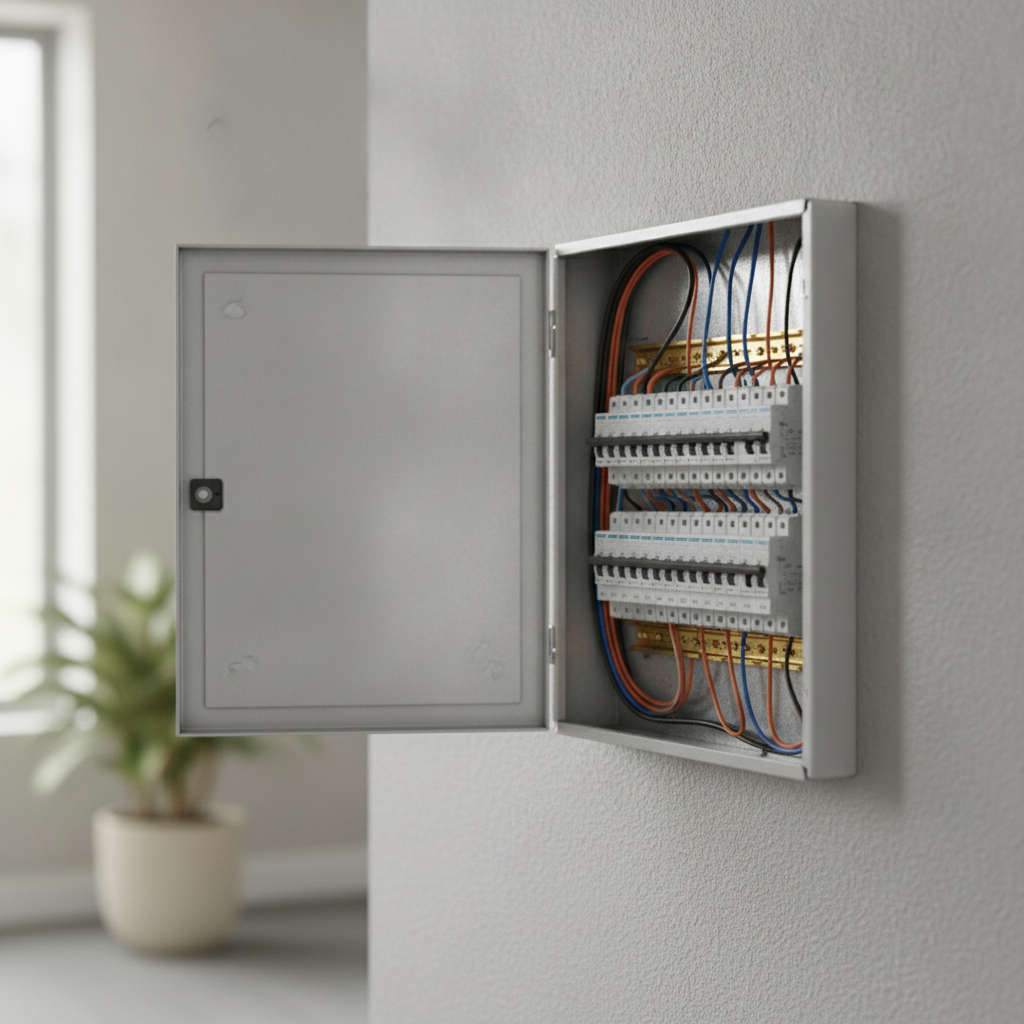
Most repeat trips trace back to one of three causes. An overloaded circuit draws more current than the breaker's rating allows. A short circuit sends current down an unintended path. A ground fault leaks current to a grounded surface. Each behaves differently, and learning to tell them apart is the heart of practical electrical troubleshooting.
Overloads: The Most Common And Most Fixable Cause
An overloaded circuit is the reason behind the majority of nuisance trips in older homes. The breaker is sized to a specific amperage, often 15 or 20 amps on general-purpose circuits. When the connected devices demand more than that for a sustained period, the breaker heats and trips. This is routine when a single circuit feeds a space heater, a microwave, and a hair dryer at the same time.
The telltale sign of an overloaded circuit is timing. It trips when you add that last high-draw appliance, and it holds steady once you unplug something. Shifting loads to different circuits usually solves it at no cost beyond your attention.
Signs You Are Dealing With An Overload
- The breaker trips only when several devices run together
- Space heaters, microwaves, or hair dryers are involved
- Resetting works until the same combination of devices runs again
- The circuit stays stable once you unplug one high-wattage item
Short Circuits: When The Problem Is Sudden And Immediate
A short circuit behaves very differently from a gradual overload. Here, a hot wire makes direct contact with a neutral wire, allowing a surge of current with almost no resistance. The breaker reacts instantly, often with a sharp snap the moment you reset it. There is no slow buildup and no particular appliance combination required.
Short circuits frequently come from damaged cords, failing appliances, or compromised wiring inside a device. You may notice a burning smell, discoloration around an outlet, or a brief spark. Because the current involved is high, this is a situation to treat seriously rather than repeatedly resetting the breaker to see what happens.
Ground Faults: Subtle Leaks That Signal Danger
A ground fault occurs when current escapes to a grounded surface, such as a metal box, a wet floor, or your own body. It is especially common in areas exposed to moisture, which is why kitchens, bathrooms, garages, and outdoor outlets are protected by ground-fault circuit interrupters. These GFCI devices trip at far lower leakage levels than a standard breaker, because the risk here is electrocution rather than fire alone.
If a GFCI outlet or breaker keeps tripping, it is often responding to moisture intrusion or a deteriorating appliance. Testing by unplugging devices one at a time can isolate the culprit. Persistent tripping with nothing plugged in points toward a wiring issue that deserves inspection.
How To Narrow Down The Cause Yourself
Before calling anyone, a methodical process can tell you a great deal. Start by noting exactly when the circuit breaker tripping happens and what was running at the moment. Patterns reveal cause more reliably than guesswork. The goal is to separate a load problem you can manage from a fault that needs professional attention.
Reset the breaker once. If it holds, add devices gradually and watch for the point of failure. If it trips immediately with nothing connected, stop testing and treat it as a wiring concern. Repeated resets on a true short or ground fault stress the equipment and raise real safety risks.
A Practical Sequence For Isolating The Issue
- Unplug everything on the affected circuit and reset once
- Reconnect devices one at a time, pausing between each
- Note whether tripping is gradual under load or instant on reset
- Check outlets and cords for heat, scorching, or odor
- Record the time and conditions of each trip for reference
When To Stop And Call A Licensed Electrician
Some findings are clear boundaries. A breaker that trips with nothing plugged in, a burning smell, warm outlet covers, or visible scorching are all signs the problem lives in the wiring rather than the appliances. These are not situations to resolve through trial and error, and they rarely stay contained if ignored.
A service call for diagnosis commonly runs in the range of a hundred to a few hundred dollars, depending on complexity and access. That cost buys an accurate reading of whether you need a minor repair, a dedicated circuit, or a panel upgrade. Weighed against the risk of an electrical fire, it is a reasonable investment in a system you depend on daily.
Upgrades And Long-Term Value To Weigh
If overloads are a recurring theme, the real issue may be that your home's electrical capacity no longer matches how you live. Adding dedicated circuits for high-draw appliances, installing arc-fault breakers, or upgrading an aging panel can resolve chronic tripping while improving safety. These are planned investments rather than emergency fixes, and they tend to pay off over the life of the home.
An older panel, particularly certain discontinued brands with known reliability concerns, may be worth replacing even if it still functions. Modern breakers respond more precisely to overloads, short circuits, and ground faults, and they integrate cleanly with the demands of today's appliances and devices.
Options Worth Discussing With A Professional
- Dedicated circuits for microwaves, heaters, and workshop tools
- Arc-fault and ground-fault protection in living and wet areas
- A panel assessment if breakers are old or frequently reset
- Capacity planning if you expect to add major appliances
Reading The Pattern Behind The Trip
A tripping breaker is a message, not a malfunction, and the pattern it follows usually points toward the answer. Gradual trips under heavy load suggest an overloaded circuit you can often manage by redistributing devices. Instant trips, odors, or heat point toward short circuits or ground faults that call for expert evaluation. Matching the behavior to the cause lets you decide, with confidence, which path your situation calls for.