
How much electricity does your home actually draw on a busy evening, with the oven running, the dryer spinning, and the air conditioning cycling on? That single question sits at the center of whether your existing service can keep pace or whether it is quietly reaching its limits. Electrical capacity rarely announces itself until something trips, dims, or refuses to run. Understanding your home's real demand puts you in a far stronger position to plan.
Reading the Signs Your Current Service Is Stretched
Most homes give warning signs long before a panel is formally deemed inadequate. A breaker that trips whenever the microwave and toaster share a circuit, lights that dim when the central air kicks on, or an electrician who mentions you're "close to full" during an unrelated repair are all worth noting. These moments reflect the gap between what your household draws and what your service was designed to deliver.
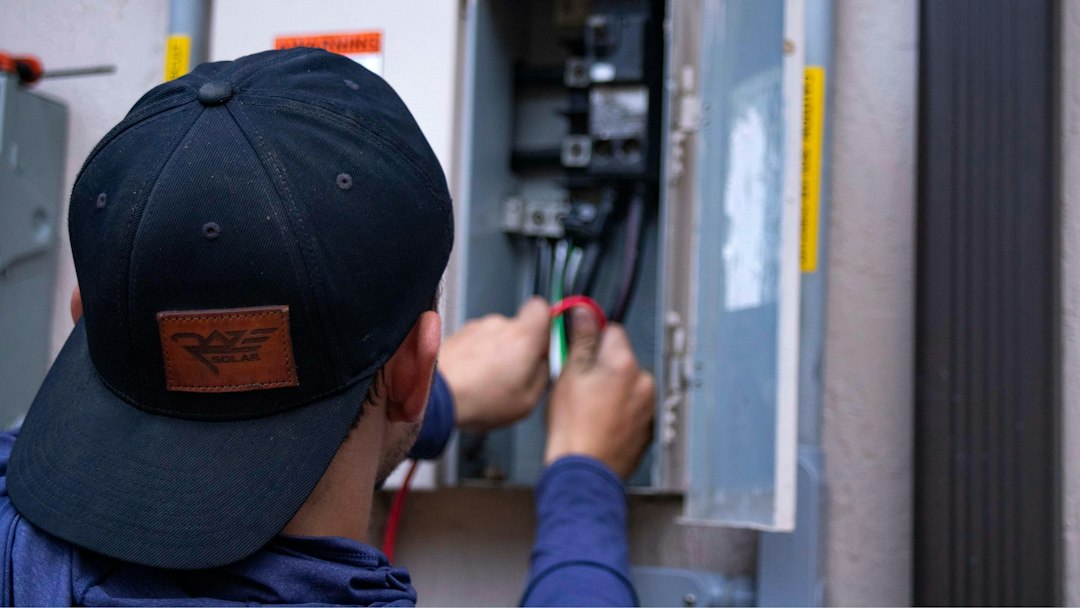
Older homes often carry 60- or 100-amp service, sized for an era of fewer appliances and no electric vehicles. If you find yourself managing which devices run at once, that behavior is itself a data point. The convenience you give up has a real, if unmeasured, cost.
Symptoms Worth Documenting Before You Call an Electrician
- Breakers that trip during normal, predictable appliance use
- Visible dimming or flicker when large motors start
- Warm outlet covers, panel surfaces, or a persistent buzzing sound
- Reliance on extension cords and power strips for permanent loads
- A panel with no open slots left for new circuits
Estimating Your Household's Electrical Demand
Deciding whether to upgrade starts with a rough load calculation, the same exercise a licensed electrician performs formally. The idea is to total the electrical demand of your major systems and general living space, then compare it against your service rating. A 100-amp panel supplies roughly 24,000 watts at 240 volts, while a 200-amp panel roughly doubles that headroom.
Consider a home with electric heating, a range, a dryer, a water heater, and central cooling. Those large loads alone can consume much of a 100-amp service before you account for lighting and everyday outlets. Whether you need a 200 amp panel often comes down to how many of these high-draw systems run in your household and how frequently they overlap.
Loads That Push Demand Upward Fastest
- Electric ranges, ovens, and cooktops
- Central air conditioning and electric furnaces or heat pumps
- Electric water heaters, especially tank models
- Clothes dryers and some high-capacity washers
- Electric vehicle chargers, particularly Level 2 units
- Workshop tools, well pumps, and pool or spa equipment
How Future Plans Change the Math
A panel decision is rarely about today alone. If you're weighing an electric vehicle, a heat pump, a kitchen remodel, or an accessory dwelling in the next several years, each of those adds meaningful load. Installing a Level 2 charger, for instance, can add the equivalent of a second dryer running for hours at a stretch, which changes the calculation considerably.
The tradeoff worth weighing is timing. Upgrading proactively while a wall is already open or while other electrical work is underway tends to cost less than returning for a separate project later. If your plans are firm, sizing for them now can spare you a second round of permits, inspections, and labor.
Upcoming Changes That Justify Extra Capacity
- Adding an electric vehicle and a dedicated home charger
- Replacing gas appliances with electric or heat pump equivalents
- Finishing a basement, attic, or garage into living space
- Building an addition or a separate dwelling unit
- Installing solar with battery storage that ties into the panel
Weighing Cost, Timing, and Long-Term Value
A service upgrade to 200 amps is a substantial project, and the price reflects several moving parts. Beyond the panel itself, the work may involve a new meter base, service entrance conductors, grounding updates, permits, and coordination with your utility. Homes with tight access, buried lines, or outdated wiring tend to sit at the higher end of the range.
Against that expense sits genuine value. A larger service supports modern appliances without juggling, reduces the friction of future projects, and can be a point in your favor when buyers evaluate a home. Some homeowners also find that consolidating an upgrade with panel replacement resolves safety concerns tied to older or recalled equipment.
Practical Factors That Shape the Total Investment
- Whether the panel location and meter can stay put or must move
- The condition of existing wiring and grounding
- Local permit fees and required inspections
- Utility scheduling for disconnecting and reconnecting service
- Whether the work pairs with other electrical or remodeling projects
Making the Call on Your Panel
The clearest path forward is a professional load calculation combined with an honest look at your plans for the next decade. If your household already runs multiple large electric systems, or if a charger and electrified appliances are on the horizon, the case for added capacity grows stronger. If your demand is modest and stable, your current service may serve you well for years.
Whatever you decide, base it on measured demand rather than guesswork, and treat the panel as infrastructure that shapes what your home can comfortably support. A well-sized service is one of those investments you notice most in its absence, and reading your demand accurately is how you avoid finding that out the hard way.