
How much should you expect to pay when the time comes to replace a tired gutter system? It is one of those home expenses that rarely gets attention until water starts pooling near the foundation or spilling over during a storm. The price swings widely depending on material, length, and whether you choose a sectional or seamless design. Understanding where your money goes makes the quote in front of you far easier to read.
Why Gutter Pricing Varies So Much
Two homeowners on the same street can receive wildly different estimates, and the reasons usually come down to material choice, roofline complexity, and local labor rates. A single-story ranch with straight runs is a simpler job than a two-story home with multiple corners, dormers, and steep pitches. Each turn, downspout, and splash guard adds material and time.
Accessibility matters too. If your crew needs scaffolding or has to work around landscaping and power lines, the labor portion of your gutter cost climbs. These variables explain why installation pricing is best understood as a range rather than a fixed number.
Aluminum Gutters And The Mid-Range Standard
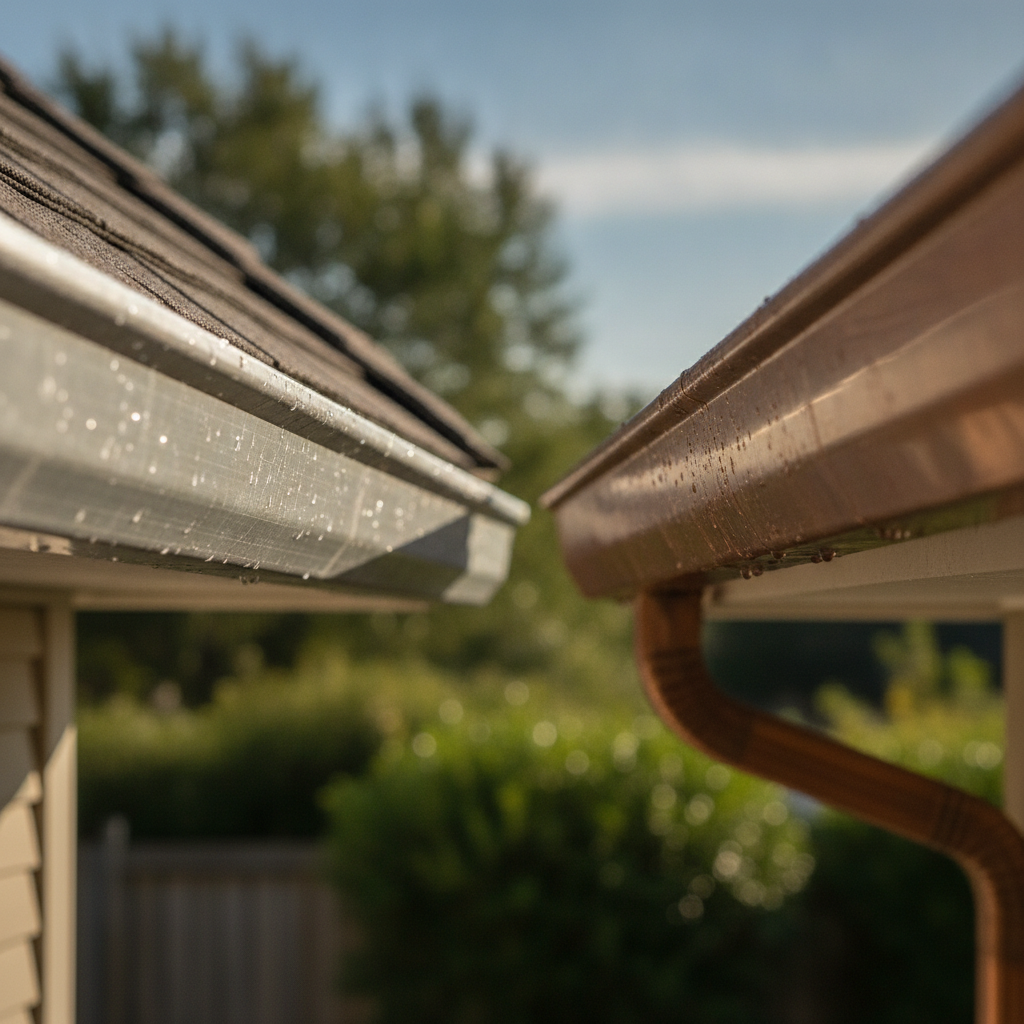
Aluminum has become the default choice for most homes, and for good reason. It resists rust, holds paint well, and weighs little enough that installation stays straightforward. For a typical home, aluminum gutters land in the middle of the pricing spectrum, offering a reasonable balance between upfront cost and expected lifespan of roughly twenty years.
The thickness of the metal matters more than many people realize. A heavier gauge resists denting from ladders, falling branches, and ice, while a thinner gauge trims the price but may bend sooner. When comparing quotes, confirm the gauge so you are weighing comparable products.
What You Typically Pay For With Aluminum
- The gutter material itself, usually priced per linear foot
- Downspouts, elbows, and the hardware that secures the system
- Labor to remove the old gutters and haul away debris
- Optional add-ons such as leaf guards or heavier gauge metal
Copper Gutters And The Premium Tier
Copper sits at the top of the price range, and the reasons are both practical and aesthetic. It can last well over fifty years, develops a distinctive patina over time, and never needs painting. For historic homes or architecture where appearance carries weight, copper is often chosen as a long-term investment rather than a routine replacement.
The tradeoff is clear in the numbers. Copper material can cost several times what aluminum does per foot, and the soldered joints require skilled labor that commands higher rates. If you plan to stay in your home for decades, the extended lifespan can soften that initial sting, though the upfront commitment remains significant.
Understanding Seamless Gutters By Linear Foot
Seamless gutters are formed on-site from a single coil of metal, cut to the exact length of each run. Because they lack the joints found in sectional systems, they leak less and need fewer repairs over their life. Most are made from aluminum, though copper and steel versions exist for homeowners who want the seamless benefit in a different material.
Pricing is quoted per linear foot, and the seamless process adds a modest premium over sectional gutters because of the specialized machine and the on-site fabrication. For many homeowners, the reduction in future maintenance justifies that difference. Measuring your total roofline gives you a quick way to estimate the material portion of the job.
Factors That Shift The Per-Foot Price
- The gutter profile, such as a standard K-style versus a half-round shape
- The width of the channel, with wider options moving more water
- Color and finish selections, including baked-on coatings
- The number of corners and downspouts your layout requires
Labor, Timelines, And What A Day On-Site Looks Like
Labor often represents a substantial share of the total, and it covers more than hanging the new channels. A crew removes the existing system, inspects the fascia for rot, installs new hangers, and ensures proper slope so water drains toward the downspouts. On a straightforward home, the entire job can be finished in a single day.
Larger or more intricate rooflines stretch that timeline, and any discovery of damaged fascia or soffit can add both time and cost. Asking your installer how they handle unexpected repairs before work begins helps you avoid surprises when the final invoice arrives.
Add-Ons That Change Your Total
Beyond the gutters themselves, several upgrades can raise your investment while reducing long-term upkeep. Gutter guards are the most common, designed to keep leaves and debris from clogging the channels and cutting down on how often you climb a ladder. Heated cable systems help in regions where ice dams form along the eaves.
Each add-on carries its own cost and payoff. Guards may add meaningfully to the per-foot price but can spare you years of seasonal cleaning. Weighing these extras against how much maintenance you are realistically willing to do yourself is part of a sound decision.
Upgrades Worth Evaluating
- Leaf guards or micro-mesh screens to limit debris buildup
- Larger downspouts that handle heavy rainfall more effectively
- Splash blocks or extensions that direct water away from the foundation
- Heated cables for areas prone to winter ice accumulation
Estimating The Cost For Your Own Home
A reliable estimate starts with measuring the total length of your roofline, since nearly every system is priced per linear foot. Count the corners and the number of downspouts you will need, then factor in your chosen material and any add-ons. Multiplying your footage by a per-foot range gives a working budget before you ever request a quote.
Gathering several estimates remains the clearest way to understand local pricing, as rates differ by region and by the complexity of the job. When you compare them, look past the bottom line to the material gauge, warranty terms, and whether old-gutter removal is included.
Putting The Numbers In Perspective
Choosing a gutter system is a balance between what you spend today and what you avoid spending later. Aluminum offers a practical middle ground, seamless construction reduces future repairs, and copper delivers longevity at a premium that suits certain homes. The right answer depends on your budget, your roofline, and how long you intend to stay. Each material carries its own mix of cost, durability, and upkeep for you to weigh.