
Have you opened your dishwasher after a cycle only to find a pool of murky water sitting at the bottom? It is a common frustration, and in most cases the cause is a straightforward blockage rather than a failed motor or control board. Understanding where water gets trapped helps you decide whether this is a quick fix or something worth a service call.
Why Standing Water Happens in the First Place
When a dishwasher won't drain, the issue usually sits somewhere along the path water takes on its way out. Food particles, grease, and mineral buildup accumulate at natural chokepoints over months of normal use. The machine itself may run flawlessly while the exit route quietly narrows.
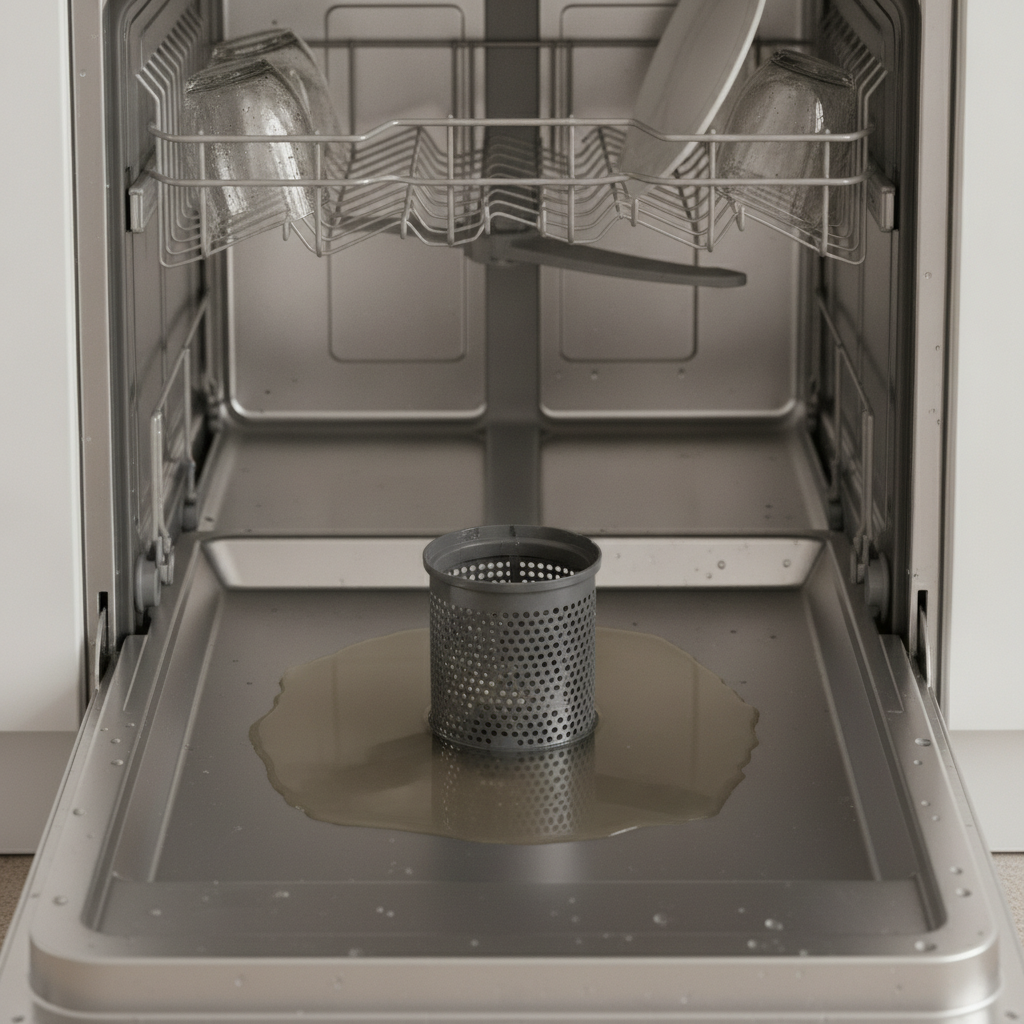
Picture a sink that drains slowly because of hair in the trap. Your dishwasher behaves the same way, except the debris collects in a filter, a bend in the drain hose, or an air gap on the counter. Identifying which one is restricted saves you from replacing parts that work perfectly well.
Tools and Preparation Before You Start
A little setup makes this job faster and keeps your kitchen clean. Most of the work involves nothing more than removing the lower rack, loosening a few clamps, and clearing debris by hand. You rarely need specialized equipment, which is part of why this repair appeals to anyone trying to avoid a service fee.
Before you begin, cut power at the breaker or unplug the unit, and lay down towels to catch the water you will inevitably displace. Having a shallow container nearby lets you bail standing water instead of fighting it.
Supplies Worth Gathering First
- A cup or small bowl for bailing standing water
- Old towels or a sponge for spills
- A screwdriver and pliers for hose clamps
- A soft brush and white vinegar for cleaning the filter
- A flashlight to inspect dark corners of the sump
Clearing the Dishwasher Filter
The filter is the first suspect and the easiest to reach, so it is the logical starting point. On most modern machines it sits at the bottom of the tub, often under the lower spray arm, and twists out by hand. Grease and softened food bind to the mesh over time, slowing drainage long before the machine stops working entirely.
Once removed, rinse the filter under warm running water and work the mesh gently with a soft brush. Soaking it in diluted white vinegar loosens stubborn mineral scale. Cleaning the filter every few weeks is one of the simplest habits that extends the life of the appliance and keeps cycles running quietly.
Inspecting the Drain Hose
If the filter looks clean and water still lingers, the drain hose deserves attention next. This flexible tube carries wastewater from the pump to your sink drain or garbage disposal, and it is prone to kinks and interior buildup. A hose crushed behind the cabinet or clogged at its connection point will trap water no matter how well the rest of the machine performs.
Disconnect the hose at the disposal or sink tailpiece, keeping a container ready for the backflow. Running water through it reveals whether the blockage is inside the hose or further downstream. If the hose is cracked or permanently kinked, a replacement typically costs a modest amount and installs with basic hand tools.
Signs the Drain Hose Is the Culprit
- Water drains slowly even after the filter is clean
- A gurgling sound during the drain portion of the cycle
- Visible kinking where the hose bends behind the unit
- Backflow when you disconnect the hose at the disposal
- A faint odor from trapped water inside the tube
Checking the Air Gap
The air gap is the small cylindrical cap you may notice on the countertop beside the faucet. It prevents dirty sink water from siphoning back into the dishwasher, and when it clogs, drainage stalls or spits water onto the counter. Many people overlook it entirely because they do not realize what it does.
Lift off the cover and the inner cap, then clear any food debris packed inside with a cotton swab or a stream of water. If you see water bubbling up around the air gap during a cycle, that is a strong indicator the blockage is downstream, often in the hose connecting the air gap to the disposal.
When the Garbage Disposal Is the Hidden Cause
Many dishwashers drain through the garbage disposal, which means a problem there can masquerade as an appliance fault. A newly installed disposal is the classic example, because the knockout plug inside the inlet is sometimes left in place, blocking the dishwasher line completely. Food lodged in the disposal chamber creates the same effect over time.
Run the disposal with water first to confirm it clears normally. If you recently replaced it and the dishwasher never drained afterward, checking for that intact knockout plug can resolve the issue in a single step.
Weighing a Repair Against a Service Call
Most drainage clogs fall well within reach of a careful homeowner, and the cost is limited to a replacement hose or a bit of your afternoon. That value proposition is why clearing a filter or air gap is worth attempting before scheduling a technician. Knowing your limits, however, is equally important.
If the sump is clear, the hose flows freely, and water still refuses to leave, the drain pump or a failed check valve may be at fault. These repairs involve electrical components and tighter tolerances, and a professional diagnosis helps you decide whether to repair or replace an aging unit. Weighing the age of the machine against the quoted repair gives you a grounded sense of its remaining value.
Factors That Point Toward Professional Help
- The pump hums but no water moves after clearing every passage
- Error codes appear related to drainage or motor faults
- The dishwasher is more than ten years old with recurring issues
- Water leaks from the base rather than draining or holding
- You are uncomfortable working near wiring or sealed components
Keeping Drainage Trouble From Returning
A dishwasher that drains cleanly stays that way with modest, consistent attention. Scraping plates before loading, cleaning the filter on a regular schedule, and periodically running an empty cycle with a cleaning agent all slow the buildup that leads to standing water. These habits cost almost nothing and quietly protect an appliance you rely on daily.
Appliance troubleshooting rewards patience and observation more than brute force. By learning where water collects and how each component contributes to the drain path, you gain the ability to judge each situation on its own terms and act accordingly.